
The Pets and People Literally Swept Aside for the FIFA World Cup...
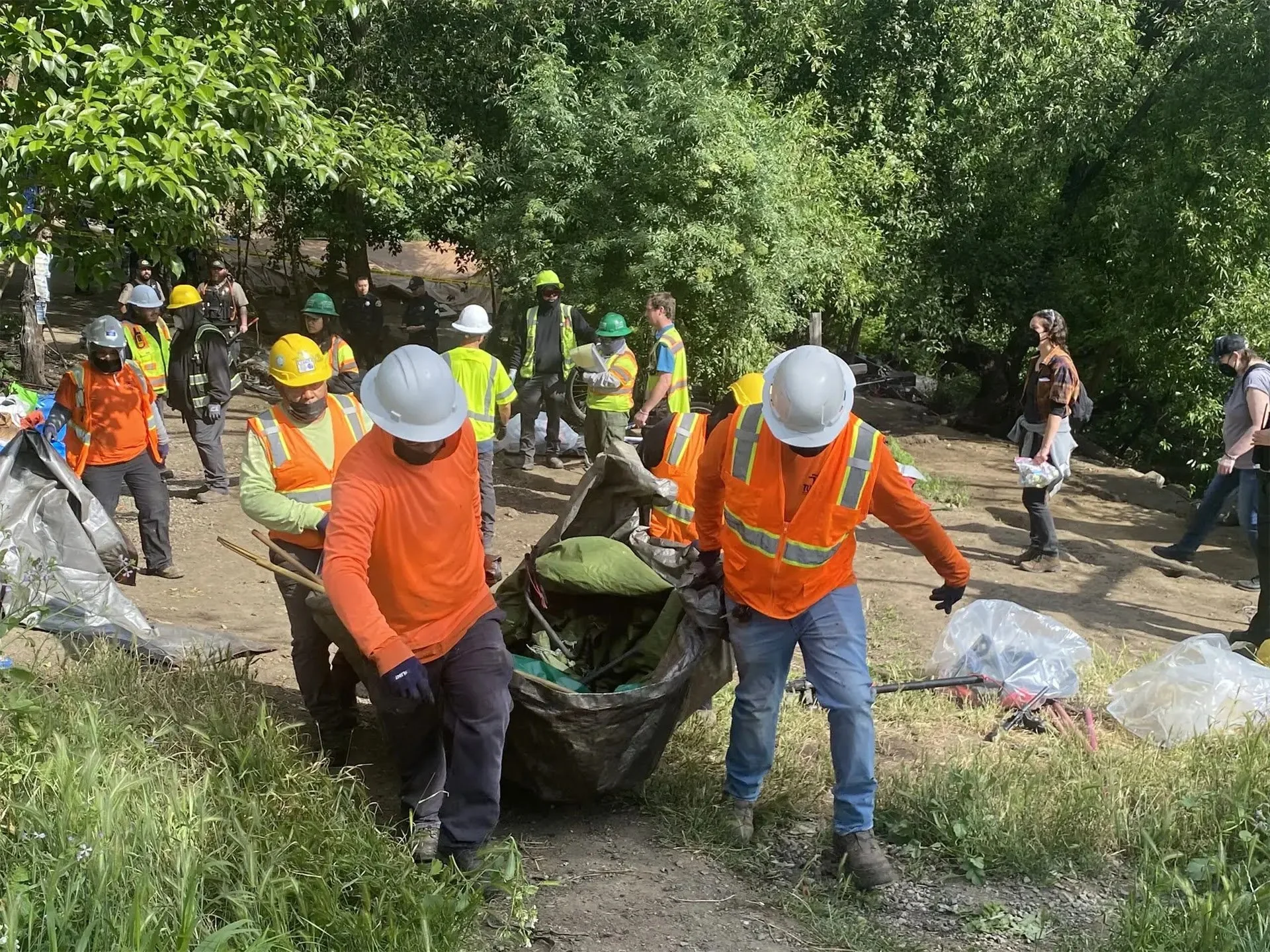
Photo by Local News Matters, showing the sweep of The Jungle encampment in San Jose.
The FIFA World Cup is now underway in the Bay Area, with six matches at Levi’s Stadium bringing millions of visitors to Santa Clara County. As the region prepares to host a global audience, San José is simultaneously finishing its sweeps of "The Jungle" and Olinder encampments, and the timing is not incidental. Large sporting events have long driven cities to clear their streets by pushing unhoused people out of sight, instead of addressing the conditions that lead to homelessness.
Encampment sweeps are regularly justified in the name of public safety, cleanliness, and restoration of public spaces. What is often left out is the harm they cause to people living in encampments and the communities they have formed.
Sweeps are the forced removal of unhoused people and their belongings from public areas, and they make it incredibly hard to relocate pets and possessions. Imagine you have a large dog. Do you pack all your belongings on top of the dog crate (if you’re lucky enough to have one) and drag that next to your bike? Do you leave the dog back at camp while you move and hope nobody takes them (including animal control)?
Because people cannot move everything and their pets at once, forced moves create serious challenges, worsened by fear of arrest or penalty that drives people to hide. During the recent sweep of Columbus Park in San José, many beloved cats were lost in the chaos and never found.
Pets often suffer the most during sweeps, as they are pushed into unfamiliar and unsafe environments. During forced moves, animals often lose essential and familiar items like bedding and toys, and are relocated to harsher environments with less shelter and more exposure to noise, traffic, and the elements. In these conditions, pets may be attacked by other animals, run away, bite out of stress, or be hit by cars. It is tragically easy for pets to perish as a result of a sweep.
While it can be easy to judge from afar, put yourself in the shoes of someone who falls into homelessness. You must gather as much as you can, move into a tent, and spend your days surviving. People experiencing homelessness do not have the social safety net that many housed community members rely on. Without stable support from community or family, would you give up your pet? It's not an option for these pets to go to already overcrowded animal shelters.
Sweeps increase both mental health crises and domestic violence. There is no domestic violence shelter in Santa Clara County that allows survivors to bring their animals. Because of the bond between people and their pets, many people stay in violent relationships rather than part with their animals, or pets themselves are left in those same abusive situations. Our current system forces survivors to choose between staying in a violent situation with their pet and leaving their pet behind to face that same violence.
In shelters and housing where pets are permitted, people cannot move in without immunization records for their pets, which are frequently lost during sweeps or in the daily instability of homelessness. People are often given just a few days to locate these records or face an impossible choice: give up their pet or forgo the shelter opportunity.
When you are struggling with the challenges of being unhoused and your brain is in a constant state of survival mode, it's incredibly difficult to function and stay organized. A request for immunization records sets off a wild hunt to find the organization that last immunized their pet—is it Humane Society Silicon Valley, St. Francis Animal Protection Society, or The Street Dog Coalition? This problem is exacerbated by the chaotic and aggressive nature of sweeps.
Right now, a large sweep is underway at The Jungle and Olinder encampments, with many residents being pushed into the Cerone tiny homes near the Milpitas border. These units are less than 70 square feet, creating new challenges for pets who have spent their lives outdoors, interacting with the community and other animals. Adjusting to such a confined space is difficult for both people and pets, and the only designated exercise area is a small patch (roughly 10 by 5 feet) of non-asphalt ground. Some pet parents living here report that their animals are showing signs of stress and depression as they struggle to adapt.
Encampment sweeps not only destabilize communities and individual lives, but also make it harder for service providers like The Street Dog Coalition (SDC) to do their work. Encampments don’t happen by chance. They are places for community, gathering, safety, resources, and access. With many pets in one place, SDC could regularly set up clinics at Columbus Park and efficiently deliver care and services. Now, with pet parents scattered throughout the city, SDC and other service providers and mutual aid organizations can’t ensure pets and guardians are getting the care and support they need.
The World Cup promises to be a celebration of community and unity. That promise rings hollow if the region’s most vulnerable residents are displaced in the name of the city’s appearance. The next time you hear about a sweep, consider the true impact of this action—on both people and their beloved pets.
Written by:
Kylie Clark Shaunn Cartwright
Board Director & Local Advocate Local Advocate
The Street Dog Coalition Bay Area, CA
